
February is National Children’s Dental Health Month. The National Children’s Dental Health Month is a…
Flossing 101
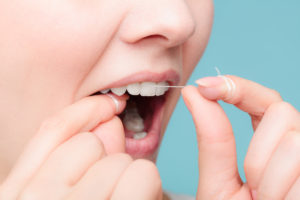
Flossing your teeth as part of a daily teeth cleaning regimen is important and necessary for long term oral health. Flossing has many benefits, but primarily accomplishes two main objectives: to remove plaque and food particles left behind by brushing and also to keep bacteria from forming in gum pockets around our teeth. In addition, flossing gives our teeth a much smoother, cleaner feeling and helps to stimulate and keep our gums healthy.
We all want a healthy mouth! Flossing is an inexpensive and relatively simple regimen that can make a long-term difference in our oral health. It is important, however, to ensure you are flossing correctly and effectively.
How to Floss Effectively
- When flossing, use approximately 18 inches or more of floss for each session. Don’t be stingy with the floss!
- Wrap the ends of the floss around your forefingers. Leave 1-2 inches of floss in between your fingers. Use your thumbs to direct this portion of floss in between each individual tooth.
- Slide the floss gently between each tooth in an up and down motion against each tooth.
- As you pull the floss between your teeth, be sure to gently wrap around the top of the tooth under the gum line in a c-shape to properly clean around the entire tooth. Wrap in each direction around both teeth individually at the gum line. This frequently missed step is critical when flossing, as it disrupts bacteria that can form under the gum line of the tooth.
- Use a new section of floss from one tooth to the next to minimize the spread of bacteria.
- If there is a tight section between your teeth, use a back and forth motion to gently ease the floss in or out of the opening to avoid damaging gum tissue. If you consistently struggle with fitting the floss in between your teeth, you may also want to try a different type of floss to access these areas more easily.
- Rinse and brush your teeth after flossing.
Developing an effective flossing regimen is as simple as picking up your floss, following these basic guidelines, and staying consistent. If flossing is a new habit for you, you may find that your gums initially bleed due to inflammation. This should subside within a week or two of regular, gentle flossing as the area is cleared. Be sure to let our office know, however, if you continue to experience bleeding gums.
The benefits of regular flossing are well worth the time and dedication you invest in your oral health. When you correctly floss daily, you will significantly reduce your susceptibility to plaque buildup and bacteria that can lead to gum disease and tooth decay in the long run.


 Dr. Rasmussen is a Hot Springs native who graduated from the University of Central Arkansas in 2017 (Go Bears). After receiving his D.D.S from The University of Tennessee in 2021, he is looking forward to serving the central Arkansas community and the wonderful people who live here.
 Dr. David Cole is a graduate from the University of Arkansas, receiving his degree in 2016, and is a huge Razorback fan! He then went to dental school at the University of Tennessee where he received his D.D.S. in 2021. He looks forward to getting to know the Central Arkansas area, and serving his community!
 Dr. James Cooper was born in Jonesboro, Arkansas. He studied at the University of New Mexico and graduated from dental school from the University of Missouri, Kansas City. After 2 years of dental experience with the Army, Dr. Cooper moved to Jacksonville in 1973 to practice dentistry.
 Dr. Jordan Cooper is from Jacksonville, AR. His father is Dr. James Cooper, a Jonesboro, AR native and practicing dentist of 39 years and his mother, Tracy Cooper, is a dental hygienist from Little Rock. Dr. Cooper graduated high school from Central Arkansas Christian, after which he entered at the University of Arkansas as a Chancellor’s Scholar in 1998.