
February is National Children’s Dental Health Month. The National Children’s Dental Health Month is a…
Who is a Good Candidate for Dental Bonding?
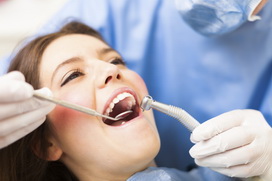
If you do not have a perfect smile, cosmetic dentistry offers a variety of choices to repair them. This is great news for people that have suffered from an unsightly smile that embarrasses them or causes them to have self-esteem issues. One of the options to correct a less than pleasing smile is dental bonding. This is the least invasive cosmetic dentistry procedure, but it will not work for everyone. Understanding its requirements and considering all of your options will help you get the smile that you want.
Aesthetic Problems
The best candidates for dental bonding are those that have aesthetic problems with their smile. This rules out those that have experienced excessive decay or trauma. Instead, it is limited to those patients that have small issues with their teeth, such as discoloration, small chips, a large gap in their teeth, or minor cracks in the enamel. Each of these issues do not require major restorative work and can be rectified with the strength of dental bonding.
The patients that are able to undergo dental bonding are those that have healthy teeth. The teeth that are discolored, chipped, or cracked must have roots that are in great condition and have most of their enamel intact. The bonding, which is a resin material in a color that matches your teeth, is simply placed over your existing enamel and shaped to match your surrounding teeth. Once the proper shape and size has been obtained, the resin is hardened with a special light, allowing it to become a natural part of your mouth.
Fixing Unique Problems
Sometimes dental bonding can also be used to help with unique problems, such as teeth that appear too short; teeth that are misshapen; or teeth that have decay and need to be filled. The problem with using dental bonding for many of your teeth or for teeth that are in the back of your mouth is that it is not the sturdiest material that you can use. If excessive chewing occurs, the bonding can be damaged, causing you to need another form of dental restoration.
Typically, dental bonding is reserved for minor changes in your mouth or for help on the teeth that do not undergo excessive pressure. In addition, patients need to be in good health and not having any other dental health issues that could interfere with the success of dental bonding in order for it to be a successful restoration.


 Dr. Rasmussen is a Hot Springs native who graduated from the University of Central Arkansas in 2017 (Go Bears). After receiving his D.D.S from The University of Tennessee in 2021, he is looking forward to serving the central Arkansas community and the wonderful people who live here.
 Dr. David Cole is a graduate from the University of Arkansas, receiving his degree in 2016, and is a huge Razorback fan! He then went to dental school at the University of Tennessee where he received his D.D.S. in 2021. He looks forward to getting to know the Central Arkansas area, and serving his community!
 Dr. James Cooper was born in Jonesboro, Arkansas. He studied at the University of New Mexico and graduated from dental school from the University of Missouri, Kansas City. After 2 years of dental experience with the Army, Dr. Cooper moved to Jacksonville in 1973 to practice dentistry.
 Dr. Jordan Cooper is from Jacksonville, AR. His father is Dr. James Cooper, a Jonesboro, AR native and practicing dentist of 39 years and his mother, Tracy Cooper, is a dental hygienist from Little Rock. Dr. Cooper graduated high school from Central Arkansas Christian, after which he entered at the University of Arkansas as a Chancellor’s Scholar in 1998.